Cumin is one of the most popular spices worldwide, but not all cumin is the same. Today, buyers face three primary options: IPM cumin, organic cumin, and conventional cumin. Understanding the differences is essential to meet compliance standards, ensure food safety, and cater to market preferences.
In this guide, we’ll compare these three variants in detail, covering farming practices, compliance, sustainability, pricing, and market demand.
What is IPM Cumin?
IPM (Integrated Pest Management) cumin is grown using techniques that minimize chemical pesticide use by adopting biological and cultural pest control methods. The focus is on residue-free cumin while keeping production efficient for large-scale trade.
Key Features of IPM Cumin
-
Significantly lower pesticide residues than conventional cumin.
-
Sustainable and safe for international markets.
-
Affordable compared to organic cumin but with better compliance than conventional cumin
What is Organic Cumin?
Organic cumin is grown without any synthetic chemicals, fertilizers, or pesticides. It follows strict organic farming practices, certified by recognized bodies.
Key Features of Organic Cumin
-
100% chemical-free production process.
-
Certified organic by agencies like NOP, EU Organic, and India Organic.
-
Preferred in premium markets for organic-certified products.
-
Typically more expensive due to higher farming and certification costs.
What is Conventional Cumin?
Conventional cumin refers to cumin grown using standard agricultural practices, including chemical pesticides and fertilizers. While it is the most economical option, it often faces challenges in meeting strict residue limits required by global markets.
Key Features of Conventional Cumin
-
Cost-effective and widely available.
-
Higher risk of pesticide residue non-compliance.
-
Limited acceptance in strict-regulation markets like the EU and Japan.
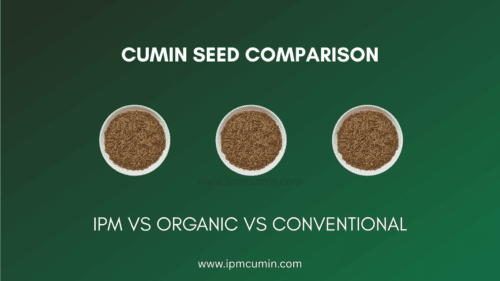
Comparison Table: IPM vs Organic vs Conventional Cumin
| Feature | IPM Cumin | Organic Cumin | Conventional Cumin |
|---|---|---|---|
| Farming Method | Minimal pesticides, natural pest control | No chemicals, certified organic | Chemical pesticides used |
| Compliance | EU, US, Japan, Canada, FSSAI | Organic certifications + compliance | Limited compliance |
| Cost | Moderate | High | Low |
| Residue Level | Minimal | Zero | High |
| Market Acceptance | High in premium & export markets | Highest in organic segment | Restricted |
Which One is Right for Your Business?
-
Choose IPM Cumin if you need residue-free, compliant, and cost-effective cumin for exports.
-
Choose Organic Cumin if your customers demand certified organic products.
-
Choose Conventional Cumin for domestic markets with low compliance requirements.
Uniseven Spices – Your Trusted Partner for All Three
At Uniseven Spices, we specialize in IPM cumin as our core product, processed at our state-of-the-art facility with Bühler’s Spark Pro color sorter. We also supply organic cumin with certification and high-quality conventional cumin for different market needs.
With over two decades of expertise, we ensure consistent quality, global compliance, and farm-level traceability.
Contact us today to get the quote and source IPM, Organic, or Conventional Cumin for your business.